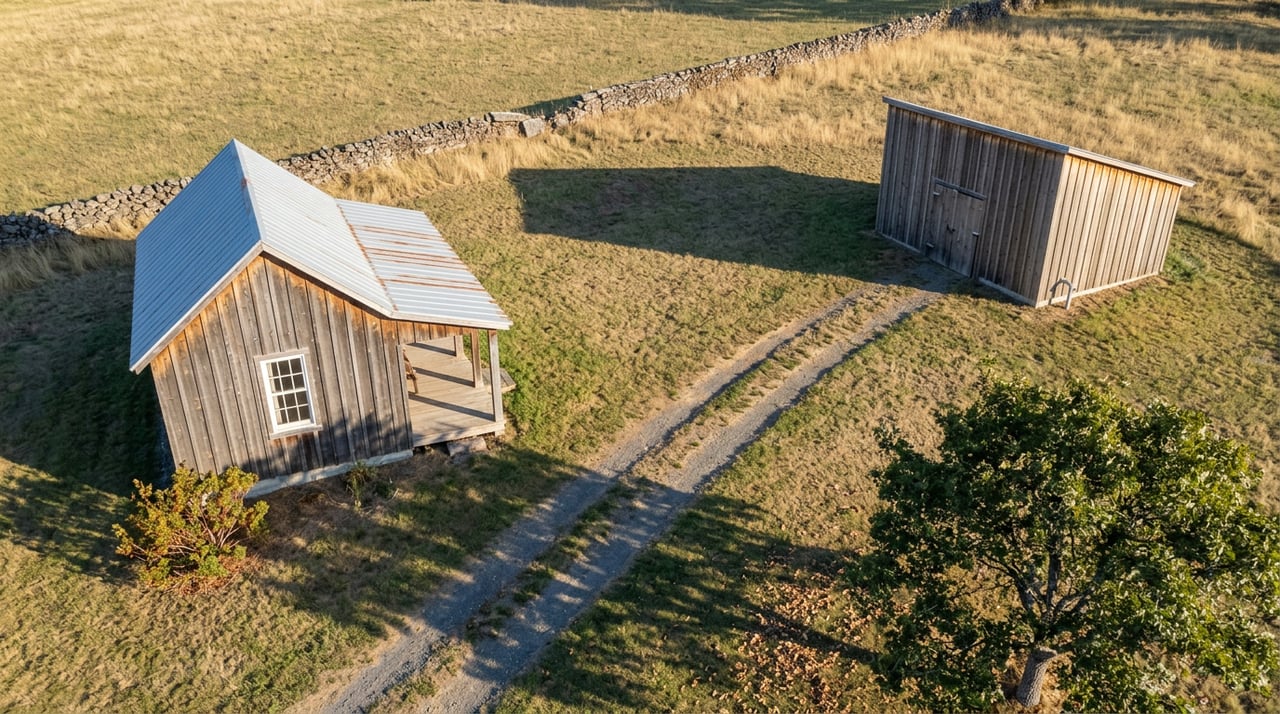
Say you find five acres outside Sequim. The listing price looks reasonable next to what land goes for closer to Puget Sound. There's room for a barn, maybe a few horses, definitely a garden that can actually ripen tomatoes in that famous dry Olympic Peninsula sun. You run the numbers, you like them, and then somewhere in due diligence you hear a phrase that wasn't in the listing at all: mitigation certificate.
If you're shopping for rural land in the Dungeness Valley, that phrase is going to determine what the property actually costs you before you ever pour a foundation. It has nothing to do with the price per acre and everything to do with a state water rule that treats every new well as a withdrawal from a river the county has already promised, on paper, to four species of salmon.
Where this actually applies
The rule in question is the Dungeness Water Management Rule, adopted by the Washington Department of Ecology in January 2013 and codified as WAC 173-518. It covers Water Resource Inventory Area 18, running roughly from the Morse-Bagley watershed divide on the west side of the basin to the Bell-Johnson divide on the east, which in practice means most of rural eastern Clallam County, including the land ringing Sequim itself.
Inside that boundary, the rule sets minimum instream flow levels for the Dungeness River and eight of its smaller tributaries, among them Bagley, Siebert, McDonald, Meadowbrook, and Cassalery creeks. Those flows matter because the watershed sits in the Olympic Mountains' rain shadow. Sequim gets a fraction of the rainfall you'd expect on the Peninsula, and by late summer the streams that still support Chinook, steelhead, summer chum, and bull trout, all four listed as threatened under the Endangered Species Act, are running close to their limit. A new well pulling groundwater lowers those flows even further, which is the entire reason the rule exists.
What mitigation actually costs
Here's the mechanism that doesn't show up in a median-price headline. If you want to drill a new permit-exempt well anywhere in the rule area, or expand how you use an existing one, Clallam County will not issue a building permit until you've purchased mitigation from the Dungeness Water Exchange, the nonprofit water bank set up to administer the rule, and recorded that certificate with the county.
The Exchange prices mitigation by category of use, not as one flat fee. Based on CC Watchdog's late-2024 reporting on those rates, a homeowner drilling a new well was looking at roughly this breakdown:
| Water use category | Approximate cost |
|---|---|
| Indoor domestic use | ~$5,250 |
| Outdoor irrigation | ~$5,250 |
| Livestock or stockwater | ~$5,250 |
Stack all three, which is exactly what a hobby farm or small acreage buyer with a garden and a couple of horses would need, and you're looking at close to $16,000 in mitigation fees before the well is even drilled. That's on top of the well itself, the septic system, and the land. The Exchange reviews its pricing periodically, so anyone deep in a transaction should confirm the current rate directly with the Exchange rather than assume these numbers are locked, but the order of magnitude is the point: this is a five-figure line item that a listing sheet will never mention.
Why it isn't going away
It's tempting to treat this as bureaucratic friction that might loosen up. It won't, and the last two years are the evidence. In April 2024, Washington's Department of Ecology declared a statewide drought emergency, and Clallam County's own reporting has noted that these declarations are arriving earlier and more often than they used to. The Dungeness Water Exchange has now mitigated the impact of more than 400 new homes and small businesses in the rule area since 2013, according to its own account of the program, which tells you two things at once: the system works well enough that development keeps happening, and the underlying water supply hasn't gotten any less tight in the process.
The parcel size trap
Water mitigation is the cost buyers hear about eventually. Parcel size is the trap that catches people earlier, often before they've even called a lender.
Clallam County doesn't recognize "mini-farm" as a zoning category. It's shorthand, and what it actually gets you depends entirely on acreage and the underlying zoning designation, whether that's rural residential, one of the county's R1 or R2 tiers, or a Limited Area of More Intensive Rural Development like Sunland, Blyn, or Dungeness Village, each of which carries its own water service arrangement. County materials note that acreage affects whether a parcel can support horses or other farm animals, while smaller lots may still work for something like a lavender patch or berry rows.
The acreage threshold matters again if you're planning a second dwelling. County code sets requirements for a detached accessory dwelling unit outside the designated urban growth areas. A parcel connected to a Group A water system, one of the larger, more regulated public or community systems, is exempt from Dungeness mitigation entirely.
What this means for your offer
Here's where the numbers actually connect. As of February 2026, the median sale price for a home in Sequim sat around $510,000, with properties spending roughly 57 days on the market, according to Redfin and Houzeo data for that month, both of which converged on nearly identical figures. That's a city-limits number, largely reflecting homes already tied into municipal water and sewer where the Dungeness rule simply doesn't apply.
Move outside city water service onto raw or lightly improved acreage and the math changes. Land near Sequim has recently been listing for an average of roughly $142,000 per acre, and that figure says nothing about whether the water needed to actually live on that land is already secured or still has to be purchased, certificate by certificate, before the county will let you build. A five-acre parcel that looks like a bargain against the city median can carry an invisible $10,000 to $16,000 obligation that only surfaces once you're past the offer stage. The median tells you what homes sell for. It says nothing about what land costs to make livable.
What to verify before you write an offer
If you're seriously considering acreage in the Sequim-Dungeness area, work through this before you get attached to a specific parcel:
- Pull the well log and ask for a recent flow test, not just proof that a well exists.
- Ask directly whether Dungeness Water Exchange mitigation has already been purchased for this parcel and recorded with the Clallam County Auditor's office.
- Confirm whether the property is served by a qualifying Group A water system, which is exempt from mitigation.
- Check the parcel's actual zoning and, if it falls inside Sunland, Blyn, Dungeness Village, or another LAMIRD, ask how that designation affects water service and building rules.
- If you're planning livestock, verify the parcel meets the county's acreage threshold for that use before you budget for stockwater mitigation you may not need, or discover you need more of it than you planned.
FAQ
Is city water in Sequim a way to avoid all of this? Largely, yes. Homes served by a qualifying Group A water system are not required to mitigate under the rule, which is one more reason in-town listings and rural acreage need to be evaluated on very different terms even when their price tags look comparable.
Rural land in the Dungeness Valley can be exactly what it promises: room, quiet, and a growing season most of Western Washington would envy. It just isn't priced the way a city lot is priced, and the difference lives in a water bank most buyers have never heard of until they're already under contract. If you're weighing acreage near Sequim and want someone who can walk the water and zoning questions with you before you write an offer, Serving The Sound works this exact corner of the Peninsula and can help you figure out what a specific parcel will really cost to live on.
This article is general information, not legal, tax or financial advice. Consult a qualified professional about your situation.